European Union: own single patent plan would end language feud
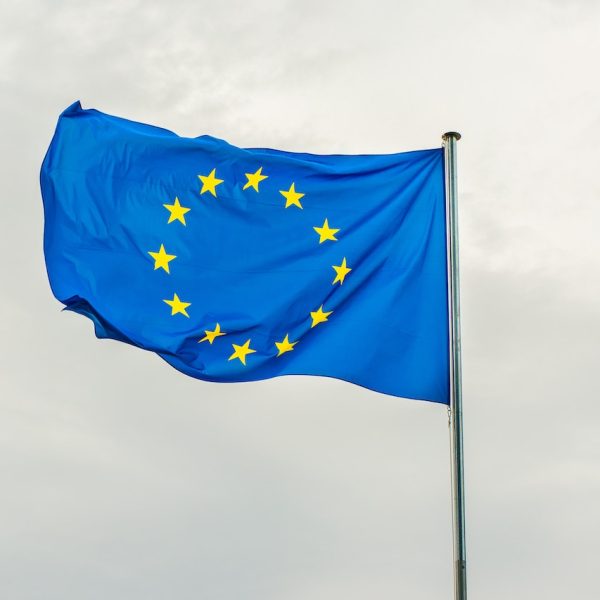
BRUSSELS. A plan for twelve nations from the 27-member European Union to create their own single patent would help inventors and end a stand-off over languages, the European Union's executive arm said on Tuesday.
Proposals for a single EU patent have been under discussion for more than a decade. The technical work was never the obstacle. Language was. Ministers for economics and enterprise failed last month to reach a compromise on the language regime, even though they had agreed a year earlier on how the new system would function.
The workaround
Twelve member states, including France, Germany, the United Kingdom, Sweden and the Netherlands, then contacted the Commission asking to use the enhanced cooperation procedure and forge ahead without the rest. Enhanced cooperation is the EU's pressure valve: it lets a group of at least nine countries proceed with an integration project when unanimity cannot be found, on the understanding that others may join later.
It matters here because questions touching multilingualism normally require unanimity, and unanimity was exactly what could not be obtained. Spain and Italy wanted their languages included in the regime. Neither would move. Under enhanced cooperation, the latest proposal needs approval by ministers on the basis of a qualified majority rather than unanimity, following the consent of the European Parliament.
The Commission said it would present detailed proposals next year for implementing enhanced cooperation on unitary patent protection, including the translation requirements.
How the language regime would work
The unitary patent would be examined and granted in English, French or German. Protection would extend across all participating EU countries. Applicants whose language is not one of the three would be able to file in any other official language of the bloc, and the cost of translating into one of the official languages of the European Patent Organisation would be eligible for compensation.
That last provision is the sweetener. It concedes the practical point that a Portuguese or Polish inventor should not be financially penalised for filing in their own language, while refusing the political point that every EU language deserves equal legal standing inside the patent system.
Why translation was the whole argument
Under the pre-existing arrangement, a European patent granted by the European Patent Office had to be validated country by country, and validation typically meant translating the claims, and often the full specification, into each national language. That is where the money went. Industry estimates at the time put the cost of a European patent covering the major markets at several times the cost of a comparable US filing, with translation and national validation fees accounting for a large share of the difference.
A single patent with a single language regime removes most of that. It also removes a substantial revenue stream from national patent offices and from the translation firms serving them, which explains why the debate was never as abstract as it looked. Behind the constitutional argument about linguistic equality sat a very concrete argument about who gets paid.
Patent translation is not ordinary translation
Anyone who thinks this is a quarrel about pride has not read a patent claim. The claims define the legal boundary of the monopoly, word by word, and a mistranslated preposition can widen or narrow the scope of protection in ways that decide infringement cases years later. The comprises versus consists distinction alone has generated litigation across multiple jurisdictions.
This is why serious legal translation services price patent work differently from technical documentation. The translator needs the engineering to understand the invention and the legal training to understand what the claim language is doing. Get the terminology inconsistent between the description and the claims and you have handed an opponent an argument. There is no such thing as a stylistic choice in a patent claim.
What Spain and Italy were protecting
The Spanish and Italian objection was not irrational. A three-language regime tells inventors, in effect, that their national language is not a language of European industry. It also creates an asymmetry in cost and comprehension: a German engineer reads the granted patent in German, a Spanish engineer reads it in a foreign language or pays to have it rendered. Multiply that across every patent in force in Spain and the burden is real.
The counter-argument is that the previous system, which nominally respected every language, made patents so expensive that small European firms could not afford broad protection at all. Linguistic equality that nobody can pay for is a courtesy, not a right.
The court nobody has built yet
A single patent needs a single place to sue. Without one, a unitary title would still be litigated in twenty-odd national courts applying twenty-odd procedural traditions, which reintroduces the cost the whole exercise was meant to remove. Plans for a unified patent court have therefore travelled alongside the patent itself, and they carry their own language problem: in what language does an Estonian company defend itself against a German claimant over a patent granted in French?
The draft answers involve interpretation at hearings and translation of pleadings, funded in part by the court. That is workable, and it is also expensive, and it means the language question does not disappear when the patent is granted. It simply moves downstream to the point where the stakes are highest.
What comes next
The Commission's detailed proposals, including the translation requirements, will decide how much of the compensation mechanism is real and how much is rhetoric. Machine translation was already being floated as the bridge, with automated renderings offered for information rather than legal effect. That distinction, information rather than legal effect, is where the next decade of argument will happen.