YouTube and the Royal Spanish Academy launch the first global reading of Don Quixote
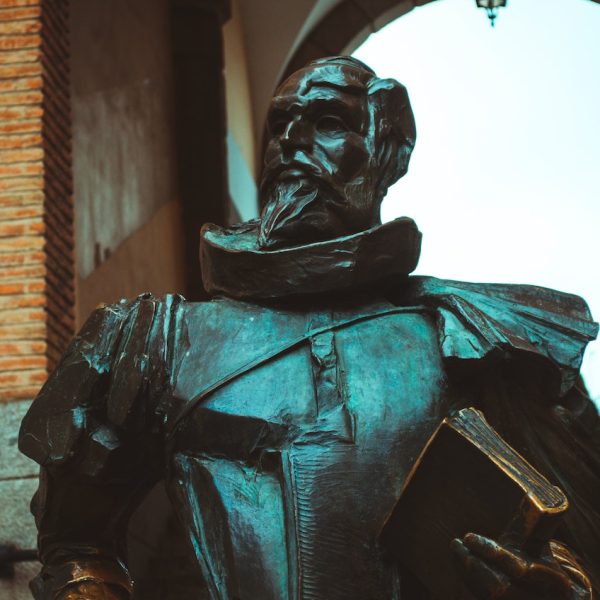
The Royal Spanish Academy, an institution founded in 1713 whose motto promises to cleanse, fix and give splendour to the Spanish language, went to YouTube. Together they launched the first global reading of Don Quixote on the internet, with more than 2,100 Spanish speakers worldwide invited to take part.
The mechanics were simple, which was the point. The novel was cut into fragments. Anyone who speaks Spanish could claim one, film themselves reading it and upload it. Stitched together in order, the recordings produce a complete reading of the book, delivered in every accent the language has: Madrid, Buenos Aires, Bogota, Lima, Mexico City, Los Angeles, Manila.
Why this book and not another
Don Quixote is the obvious choice and also the only real one. Published in two parts in 1605 and 1615, it is routinely described as the first modern novel, and its author, Miguel de Cervantes, gives his name to the language itself. Spanish is la lengua de Cervantes in the same way English is the language of Shakespeare, and the comparison is closer than it looks: both men were writing at the moment their language settled into something a modern reader can still follow.
The book is also, crucially, funny. Whatever else Cervantes intended, he wrote a comedy about a man who reads too many books and goes mad, and the jokes still land four centuries later. That matters for a project built on volunteers. Nobody was going to record 2,100 fragments of a treatise.
What the Academy was really doing
The RAE is not, by reputation, an institution that chases the internet. It publishes the dictionary, it issues rulings on grammar, and it has spent three centuries being described as conservative. Putting Cervantes on YouTube was a deliberate break, and it served a purpose beyond the anniversary photographs.
The Spanish language has around 500 million speakers, and only about a tenth of them live in Spain. The centre of gravity moved to the Americas a long time ago, and the Academy's authority now rests on its association with the twenty-odd national academies across Latin America, the Philippines and the United States rather than on anything it can dictate from Madrid.
A crowdsourced reading is an argument about exactly that. Every accent in the recording is presented as equally legitimate Spanish. There is no correct pronunciation of Cervantes, only a great many of them.
Reading aloud, which is how it was meant to be heard
There is a nice irony buried in the format. The novel was written for an audience that was largely illiterate and consumed books by hearing them read out in taverns and kitchens. Cervantes's prose is built for the ear: long, rolling sentences, dialogue that runs for pages, jokes that depend on timing.
- The fragments were short enough that anyone could manage one
- No equipment beyond a phone or a webcam was required
- The result was a permanent, freely available recording of the complete text
- Schools and reading groups could take part as easily as individuals
Read aloud, the book stops being a monument and becomes a performance again, which is what it was in the first place.
The translation angle
Don Quixote is also one of the most translated books ever written, and the English versions make a small study in themselves. Thomas Shelton translated part one within a decade of publication, while Cervantes was still alive. Tobias Smollett had a go in the eighteenth century. Edith Grossman's version in 2003 sent the novel back onto bestseller lists in English, and Cervantes's own text plays a joke on all of them, since the narrator claims the story is itself a translation from an Arabic manuscript by a historian named Cide Hamete Benengeli.
The novel is, in other words, a book that pretends to be a translation, written in a language it helped to standardise, read aloud by two thousand strangers in a dozen countries. It is difficult to design a better argument for the durability of a text.
The Academy's other problem
Behind the celebration sits a slower anxiety. The RAE has spent the last two decades watching English swallow Spanish technical vocabulary whole. Its members complain, with some justification, that Spanish speakers now say the English word for anything invented after 1990, and the Academy's counter-proposals, its careful Spanish coinages for software terms and marketing jargon, are politely ignored by the people who actually write the software.
Meanwhile the internet itself has become the largest corpus of Spanish ever assembled, and it is not one the Academy controls. Its lexicographers now mine that corpus for evidence of how the language is really used, which is a quiet admission that description has overtaken prescription. Turning up on YouTube with Cervantes was, seen from that angle, an act of self-preservation as much as celebration: an institution demonstrating that it can operate on ground it did not choose.
What the format proved
Crowdsourced readings have since become a familiar cultural gesture, applied to everything from national epics to constitutions. The template was set here: take a canonical text, break it into pieces small enough that participation costs nothing, and let the accents do the rest.
The projects that work share a feature. They ask for a small, concrete act rather than an abstract commitment to culture. Recording ninety seconds of a novel on a phone is achievable. Reading a 900-page book is not, for most people, and the Academy knew it.
The institution behind the project, the Royal Spanish Academy, still publishes the dictionary that settles arguments across the Spanish-speaking world, and its official site now hosts most of that work online. The novel itself, Don Quixote, remains the book everybody in Spanish has an opinion about and rather fewer have finished, a state of affairs regularly confessed in reading communities such as r/books. A global reading was, among other things, a very elegant way of getting people to start.